Culture, Chaos and Calm
We spent three days in busy Delhi with our two kids. We enjoy slow and relaxed travel, so we deliberately did not overpack our itinerary, focusing instead on a balanced mix of sightseeing, local experiences, and downtime that works well when traveling in Delhi with children.
Delhi is a city of layers. Ancient empires, colonial avenues, spiritual sanctuaries, and buzzing neighborhoods all coexist in a beautiful and sometimes overwhelming harmony. Over three days, we managed to get a deep dive into the Indian capital without feeling rushed or overloaded. It was a mix of iconic landmarks, very local experiences, great food, and a few much needed moments of calm before continuing our trip onward to Agra.
Our Three Day Delhi Itinerary
Lotus Temple
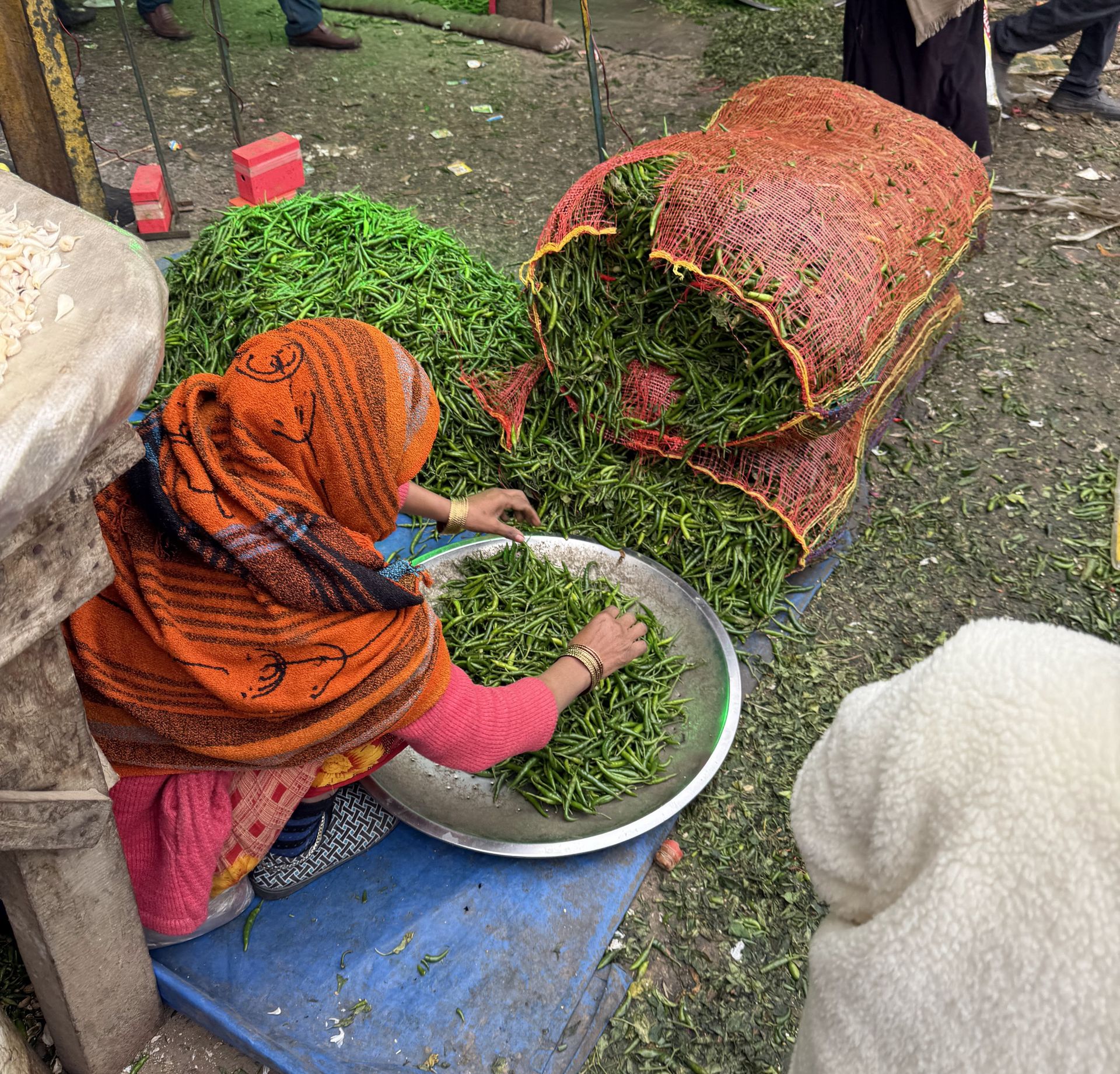
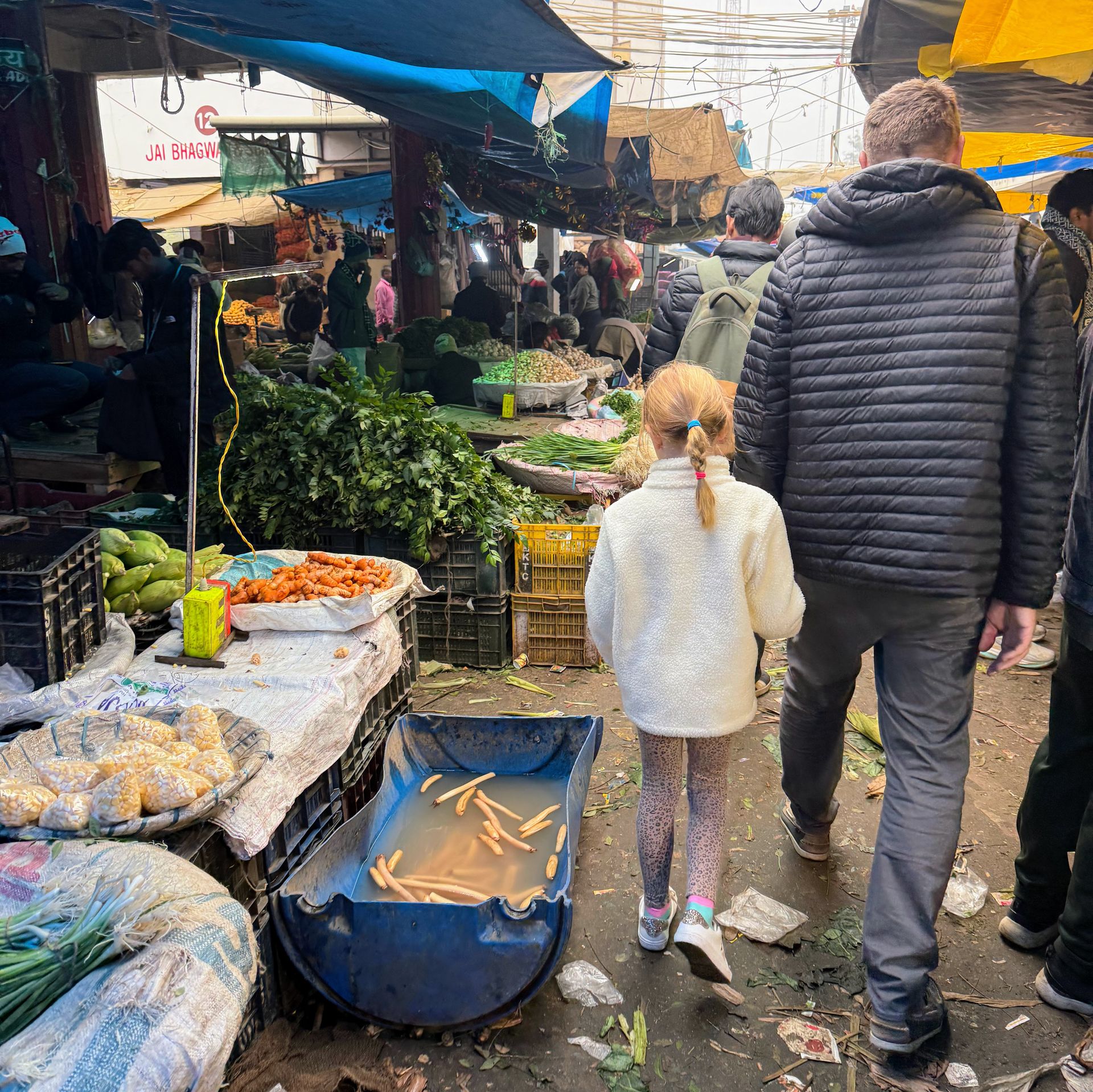
Okhla vegetable market
Sanjay Colony tour
Lunch at Pindi
Lodhi Garden
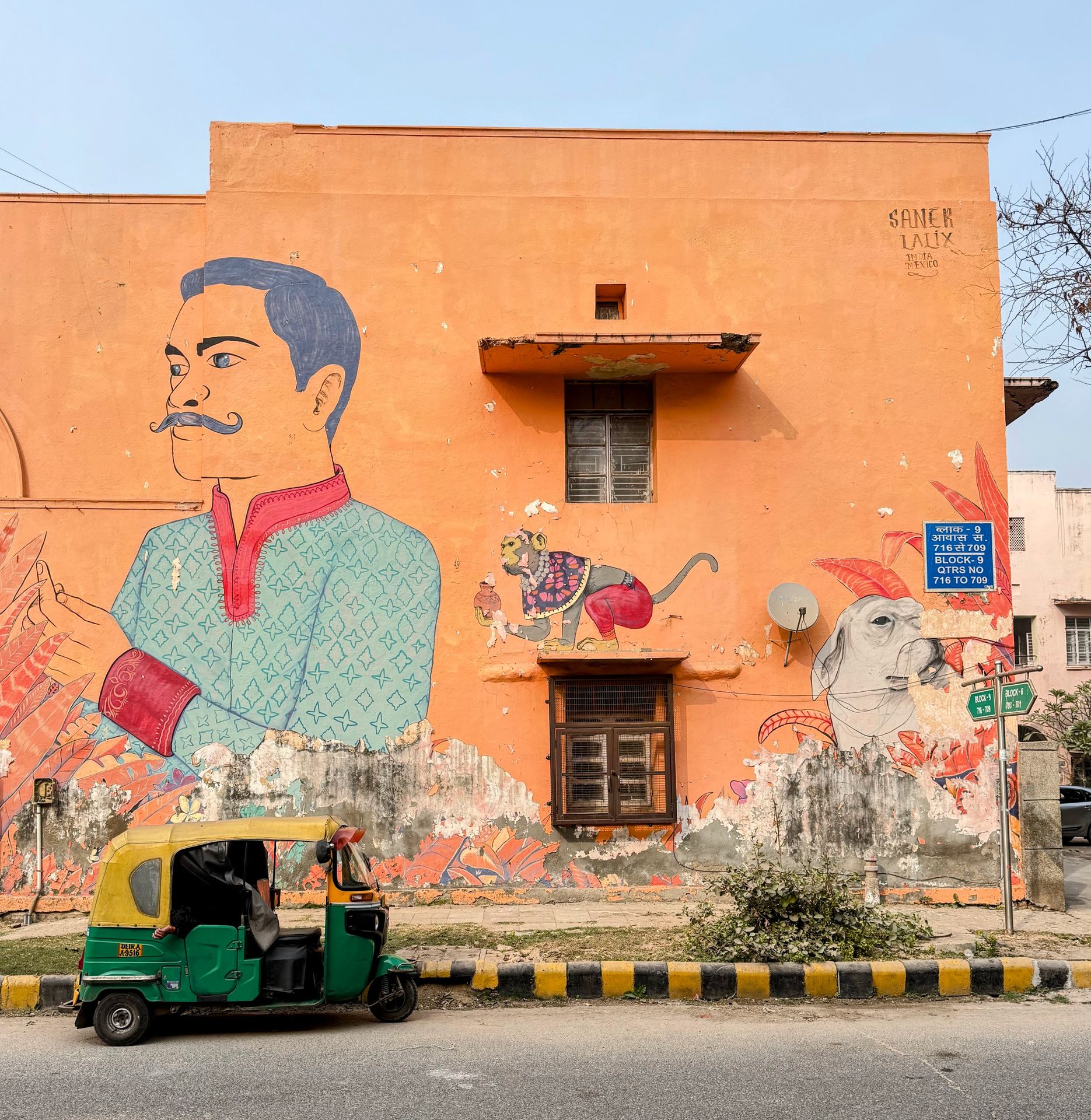
Lodhi Art District
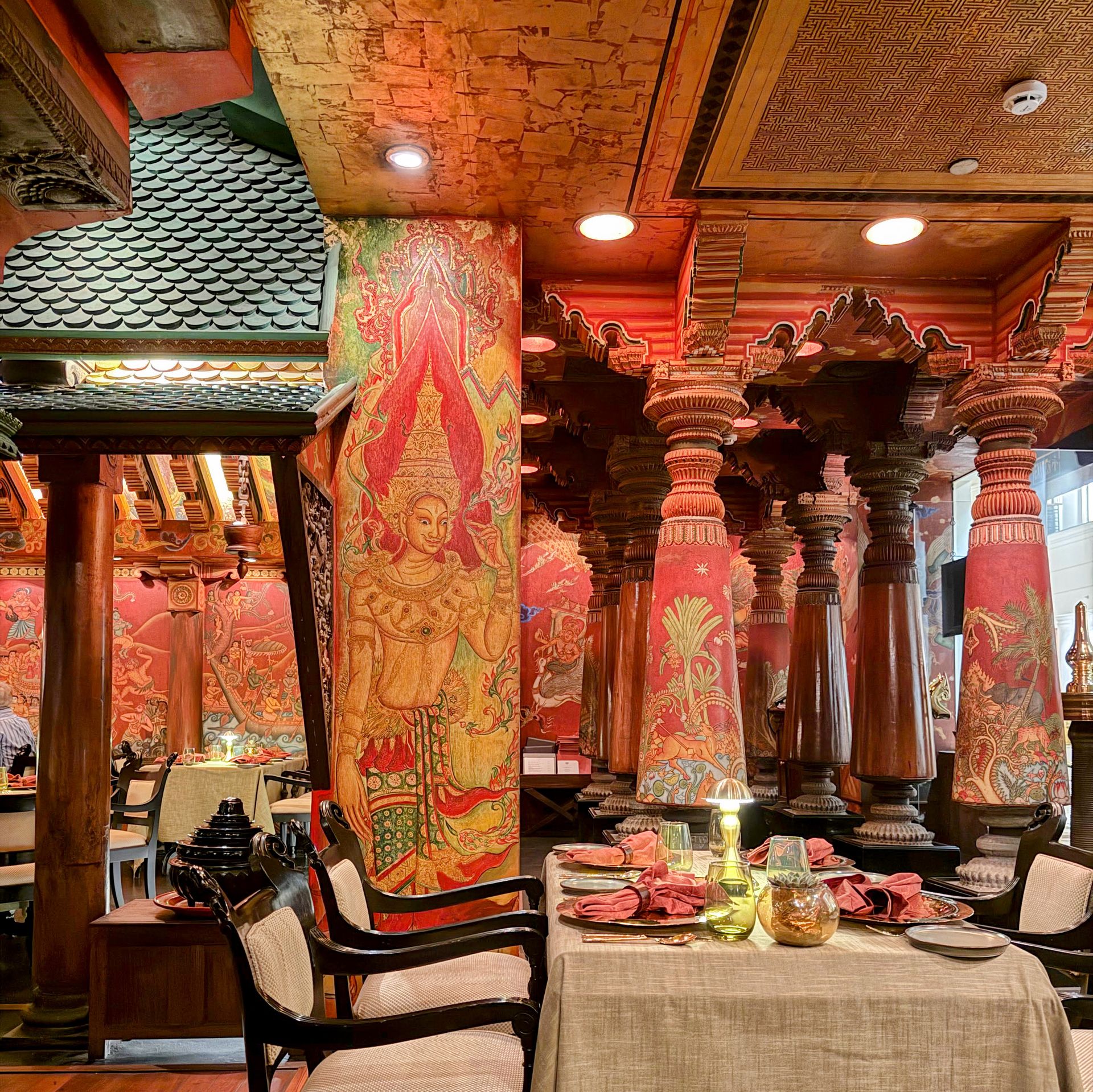
Dinner at The Spice Route
Old Delhi cycling tour with Delhi By Cycle
Gurudwara Bangla Sahib and langar kitchen
Hauz Khas Village
Dinner at Coast Cafe
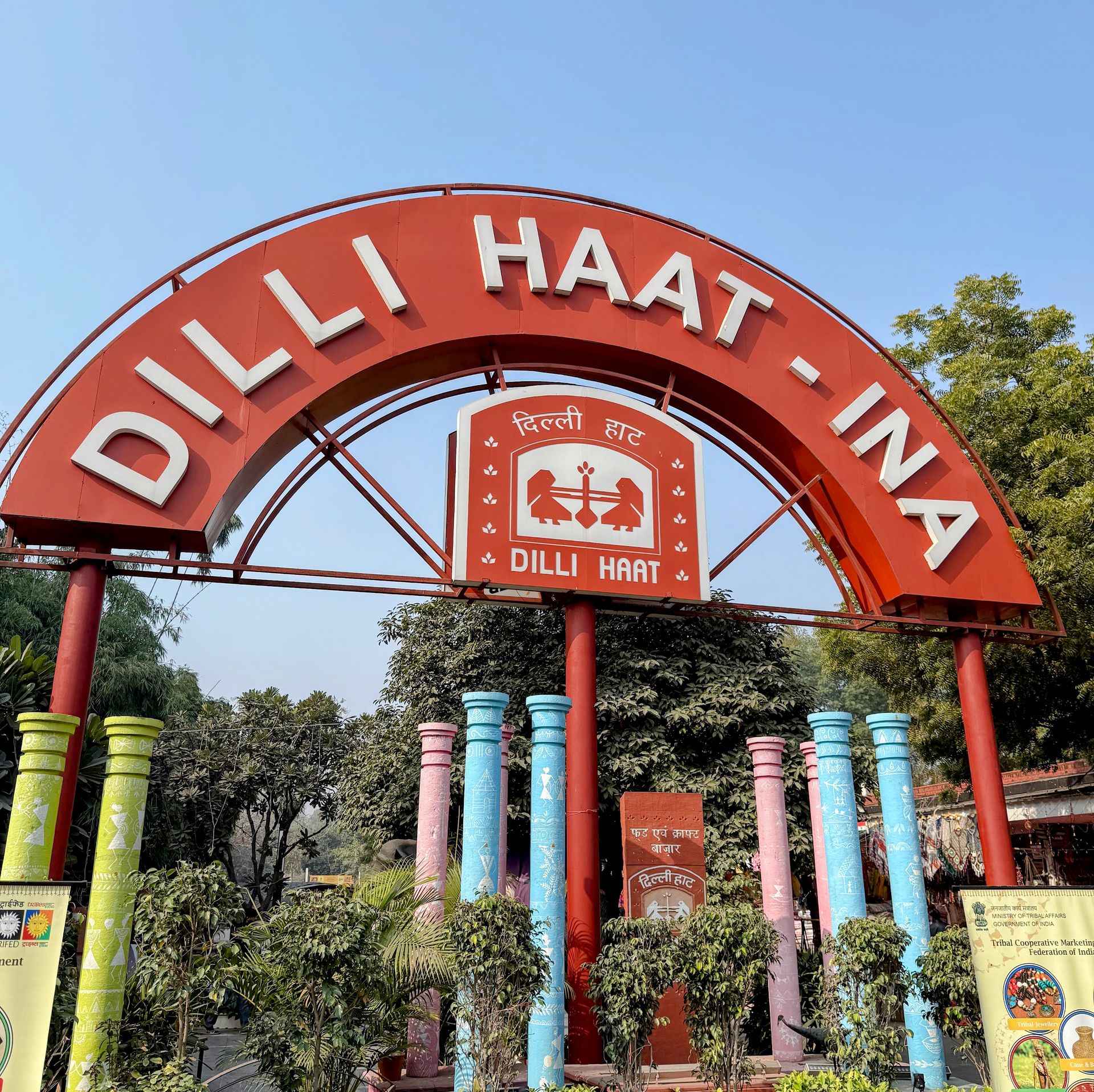
Dilli Haat Market
Qutb Minar Complex
Lunch at Olive Bar and Kitchen
Afternoon drive from Delhi to Agra
Day 1 : Sacred Spaces, Local Life
and Creative Corners
We began the journey early, leaving the hotel at 08:15 for a short drive south.
Lotus Temple
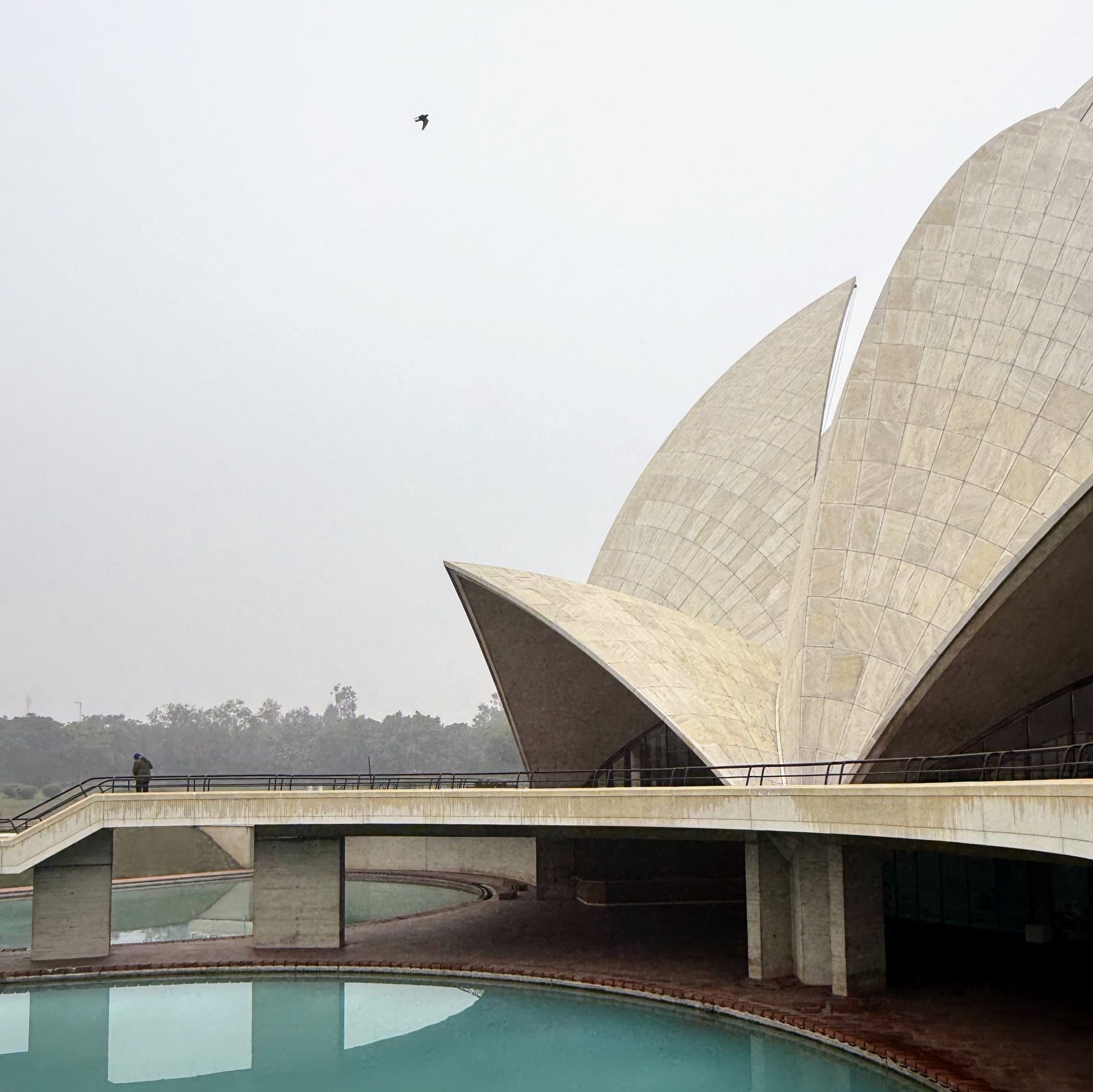
The morning opened at the serene Lotus Temple, one of Delhi’s most striking architectural landmarks. Shaped like a blooming lotus, this Baháʼí House of Worship is open to people of all faiths and backgrounds. It is designed as a space for prayer, meditation, and quiet reflection, without rituals, religious symbols, or images linked to any specific belief.
We really enjoyed this calm introduction to the city. It was not too crowded since we arrived early, which made the visit even more peaceful. Inside, the high ceiling is incredibly impressive, and the modern, minimalist furniture reflects a sense of neutrality that aligns perfectly with the core philosophy of the Baháʼí Faith, which emphasizes unity, equality, and harmony among religions.
Note You will be asked to remove your shoes, so if you have cold feet, pack a dark pair of socks. They will most likely be ruined after the visit.
Okhla Vegetable Market
Just outside, the atmosphere changed instantly at the Okhla vegetable market. Vendors shouted prices, cycle carts squeezed through narrow paths, and piles of fresh produce exploded with color. It felt raw, chaotic, and completely authentic. There were no tourists around, only locals going about their daily routines. Our driver mentioned that only recently have a few tourists started asking to stop here, so I assume it is only a matter of time.
Sanjay Colony Tour
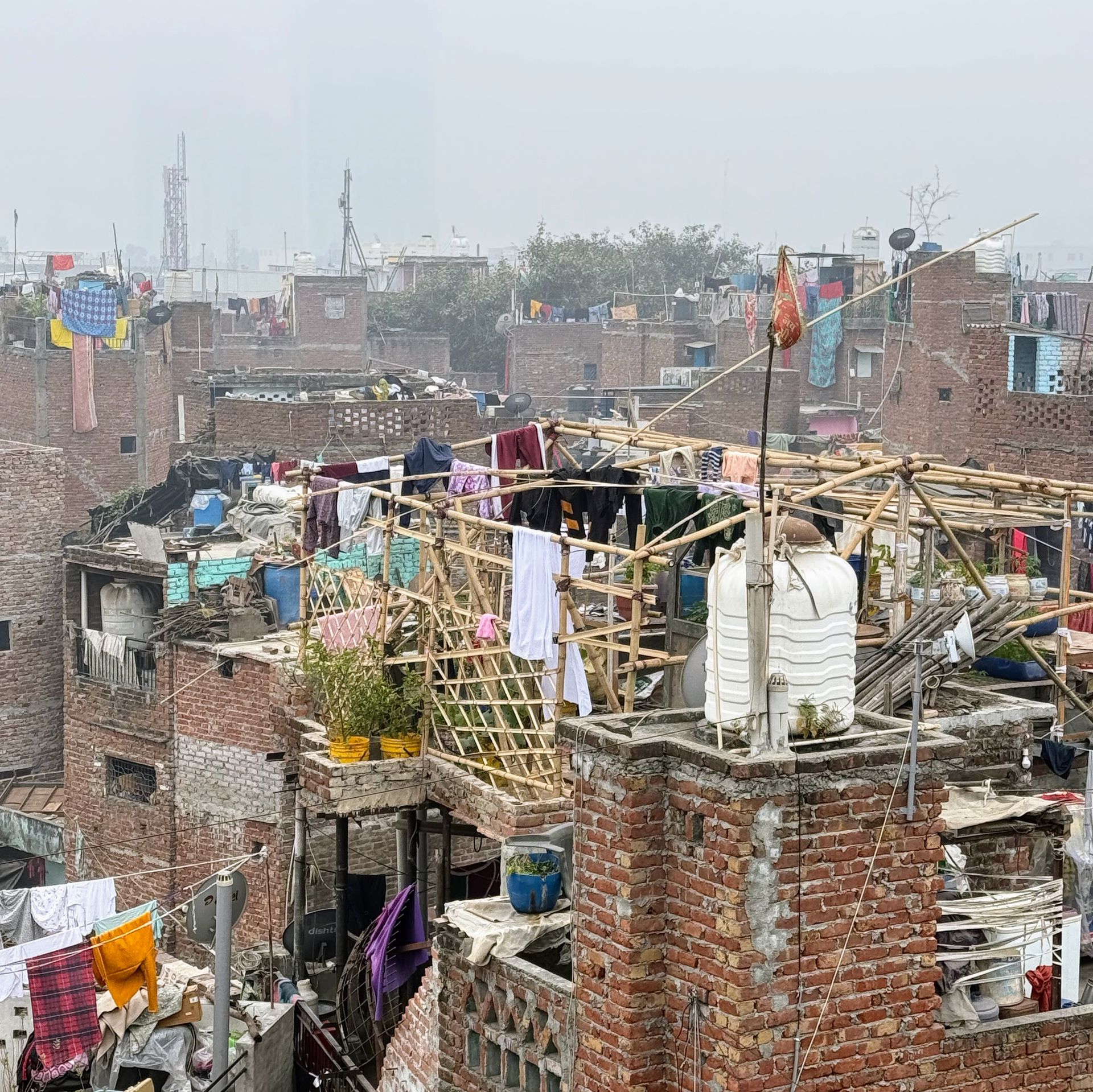
Next, we headed to Sanjay Colony, a large, vibrant, and densely populated slum community in South Delhi. Built on around 25 acres of land and located near the Lotus Temple, it is home to around 50,000 residents. The area is known for garment recycling and production, as well as a strong sense of community life.
We booked this visit through Reality Tours and Travel, who describe the experience in a very honest and respectful way. No photos are allowed here. We spent a couple of hours exploring the neighborhood on foot, visiting small scale businesses, a small temple, and residential areas. The tour offered real insight into daily working and residential life and showed how, despite very challenging living conditions, the area remains full of positive energy and resilience.
As we walked through the area, we saw the conditions in which many community members work. Many sit directly on the ground, sorting and organizing fabric scraps coming from nearby industries for recycling. There is no guaranteed income, so people come every day hoping there will be work available. They work outdoors in all temperatures, from extreme heat to cold mornings. The monsoon months are especially difficult, as the work is entirely outdoors and during that period there is often no business at all. When work is available, many are paid around 700 rupees per day, but this is never assured and depends entirely on demand.
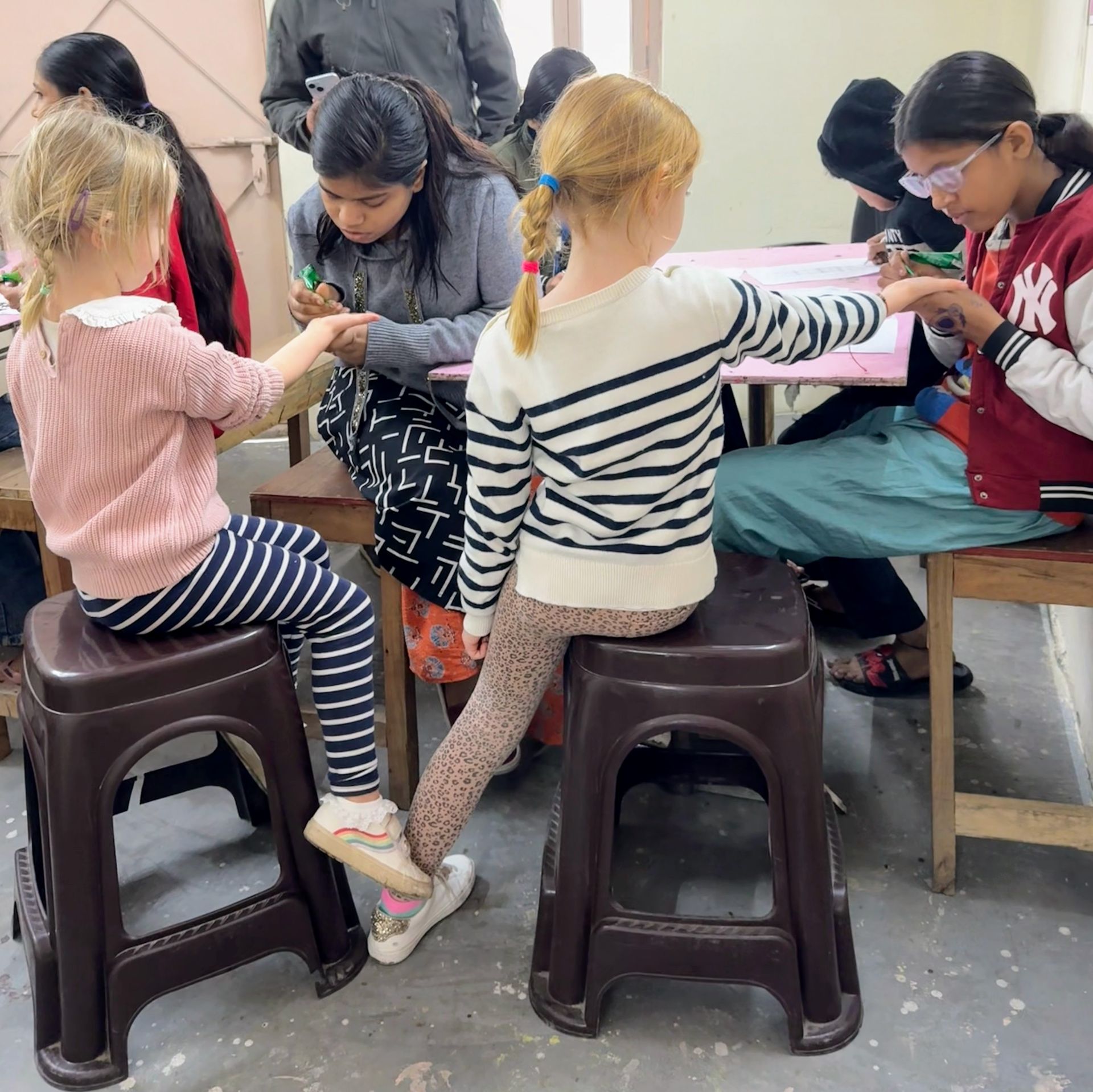
During the visit, we met students and teachers at the school run by Reality Gives. Our girls were immediately welcomed by a group of kids attending a henna class and were invited to sit down and have their hands painted. It was spontaneous, joyful, and incredibly warm, turning the visit into a genuine moment of connection rather than simple observation.
Lunch at Pindi
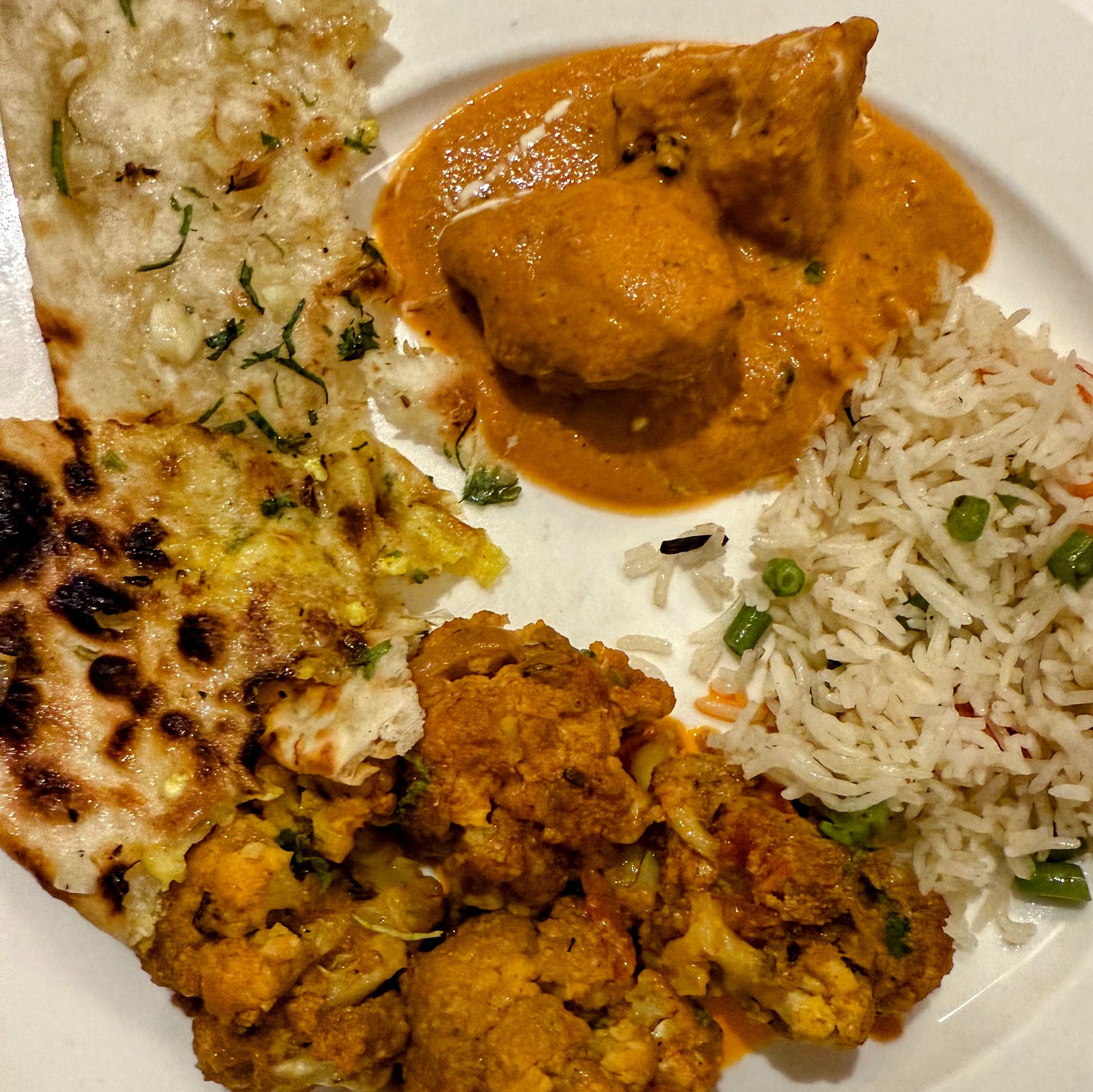
By early afternoon, it was time to refuel at Pindi, a well known spot for classic North Indian food. It definitely seemed popular with tour groups, as many large tables were booked, but the food did not disappoint. Rich curries, smoky flavors, and some of the best garlic naans we had during the entire trip made it worth the stop.
Lodhi Garden and Art district
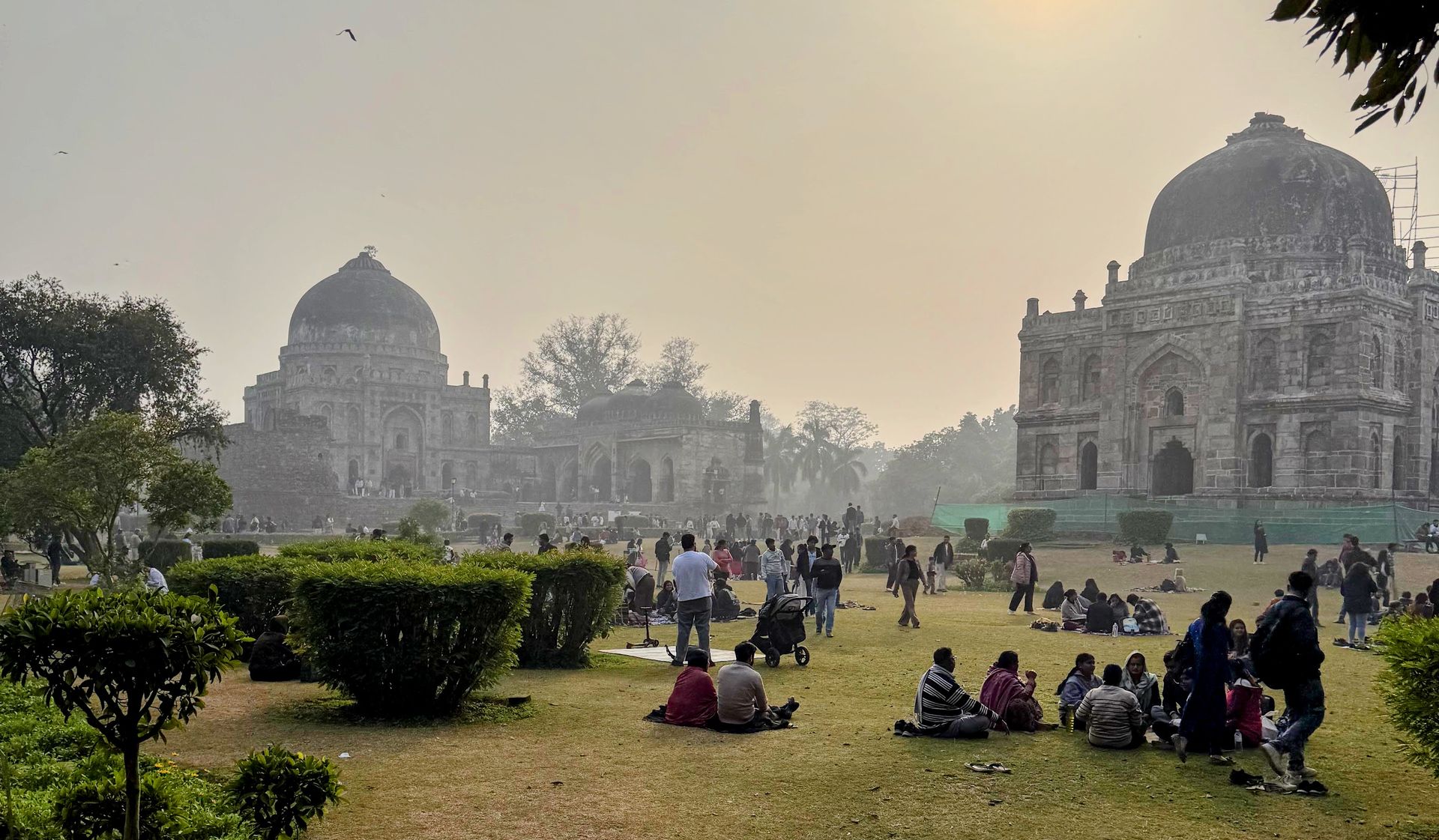
The late afternoon was all about contrast and slowing things down. Lodhi Garden offered wide green spaces, Mughal era tombs, and shaded walking paths that felt like a breath of fresh air after the morning’s intensity.
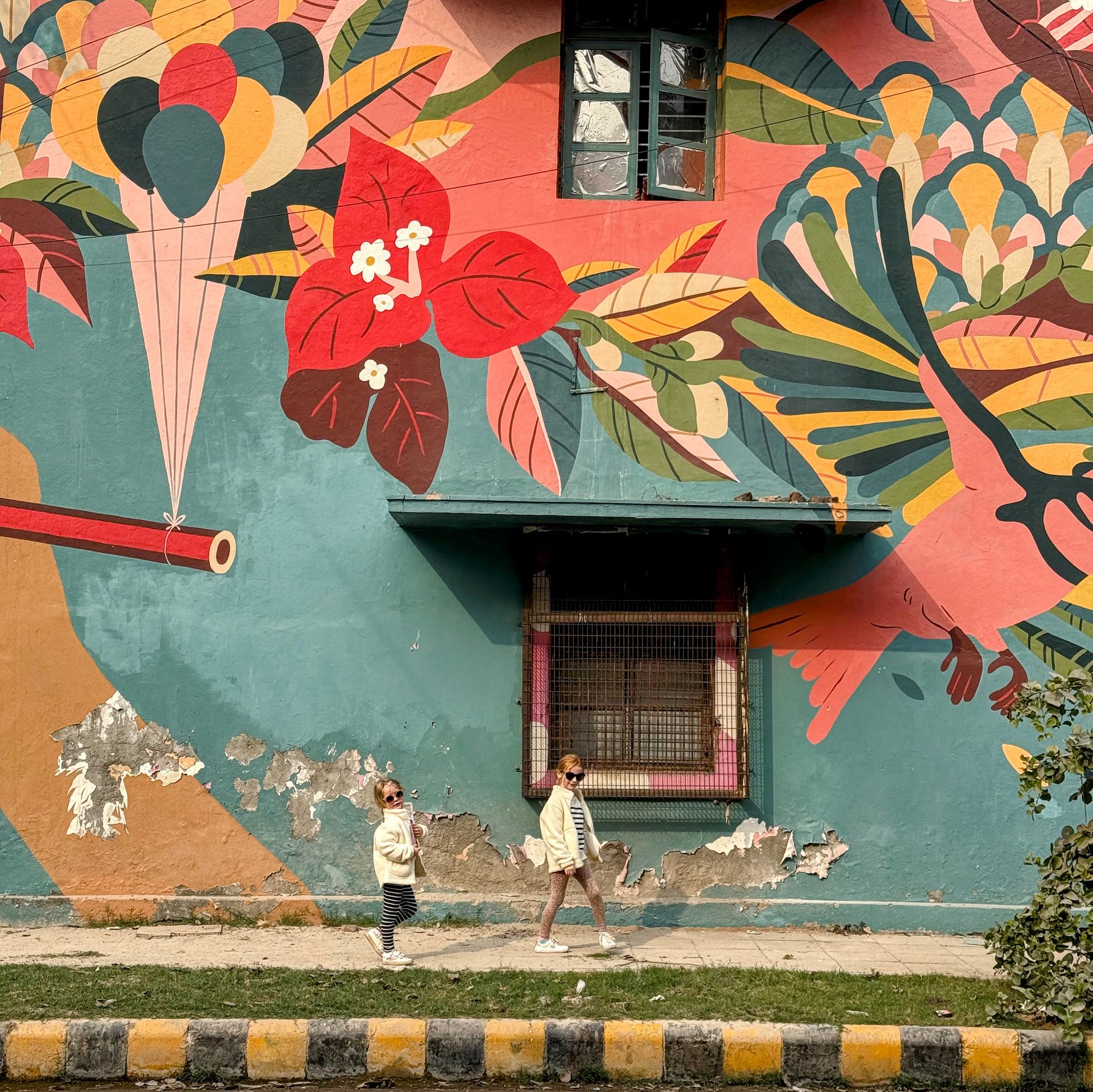
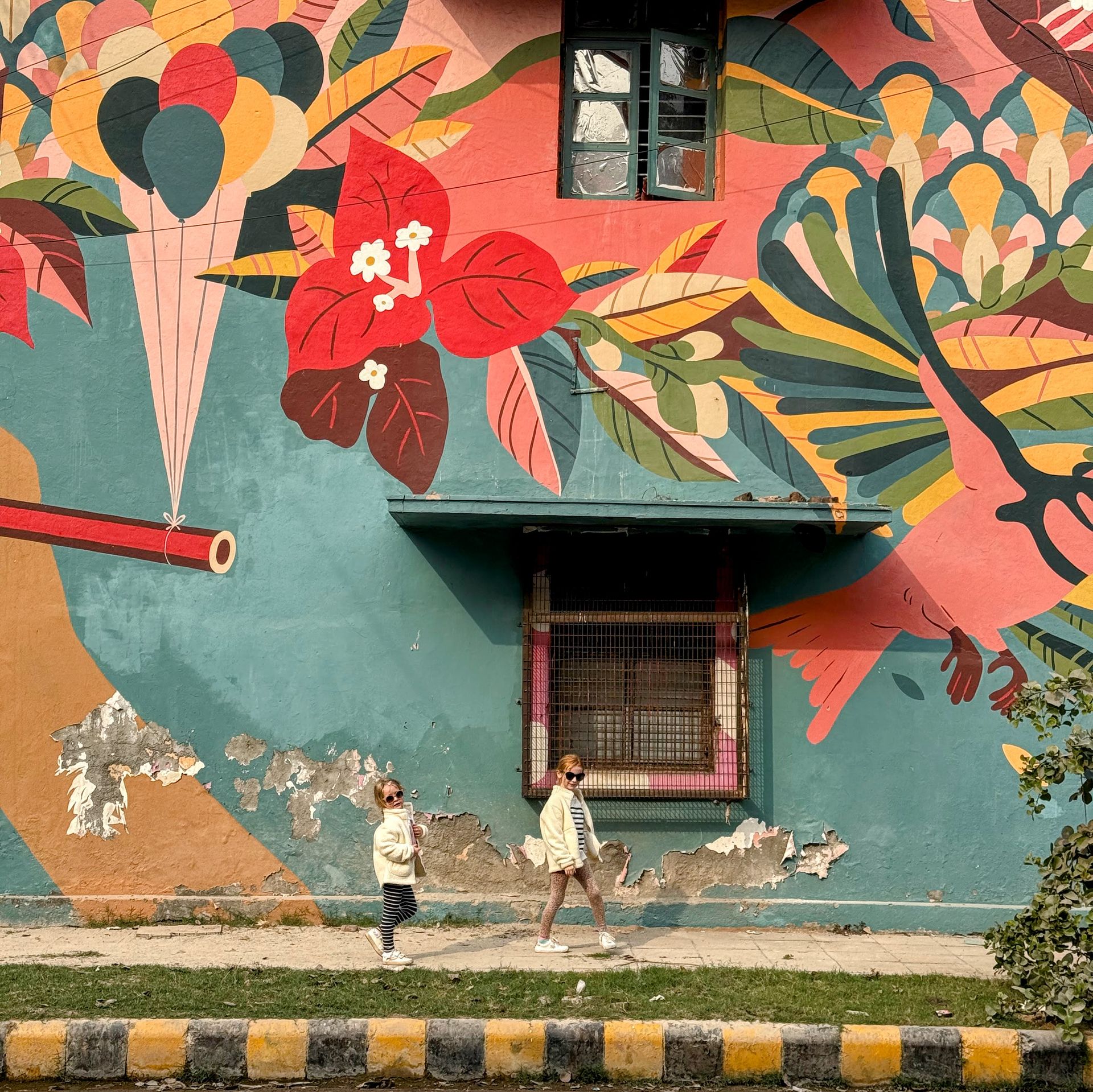
Right next door, the Lodhi Art District brought the energy back in a different way. Colorful murals by Indian and international artists covered entire buildings, turning the neighborhood into an open air gallery. It is easily one of the most photogenic parts of the city.
Dinner at the Spice Route
After returning to the hotel, the day ended with dinner at The Spice Route. The decor alone is worth the visit, with beautiful interiors inspired by Asian influences. One important tip is to insist on no spices when ordering, as everything is extremely spicy otherwise. The restaurant is definitely on the higher price side, but the atmosphere and setting made it a memorable way to end the first day in Delhi.
Key
Milestone
Reaching new heights together
Day 2 : Old Delhi Energy
and Spirituality
Day two started before sunrise, and it hurt a little.
Cycling Through Old Delhi
At 06:30, we hopped on our bikes for the Shah Jahan tour with Delhi By Cycle, an intense and unforgettable way to experience Old Delhi.
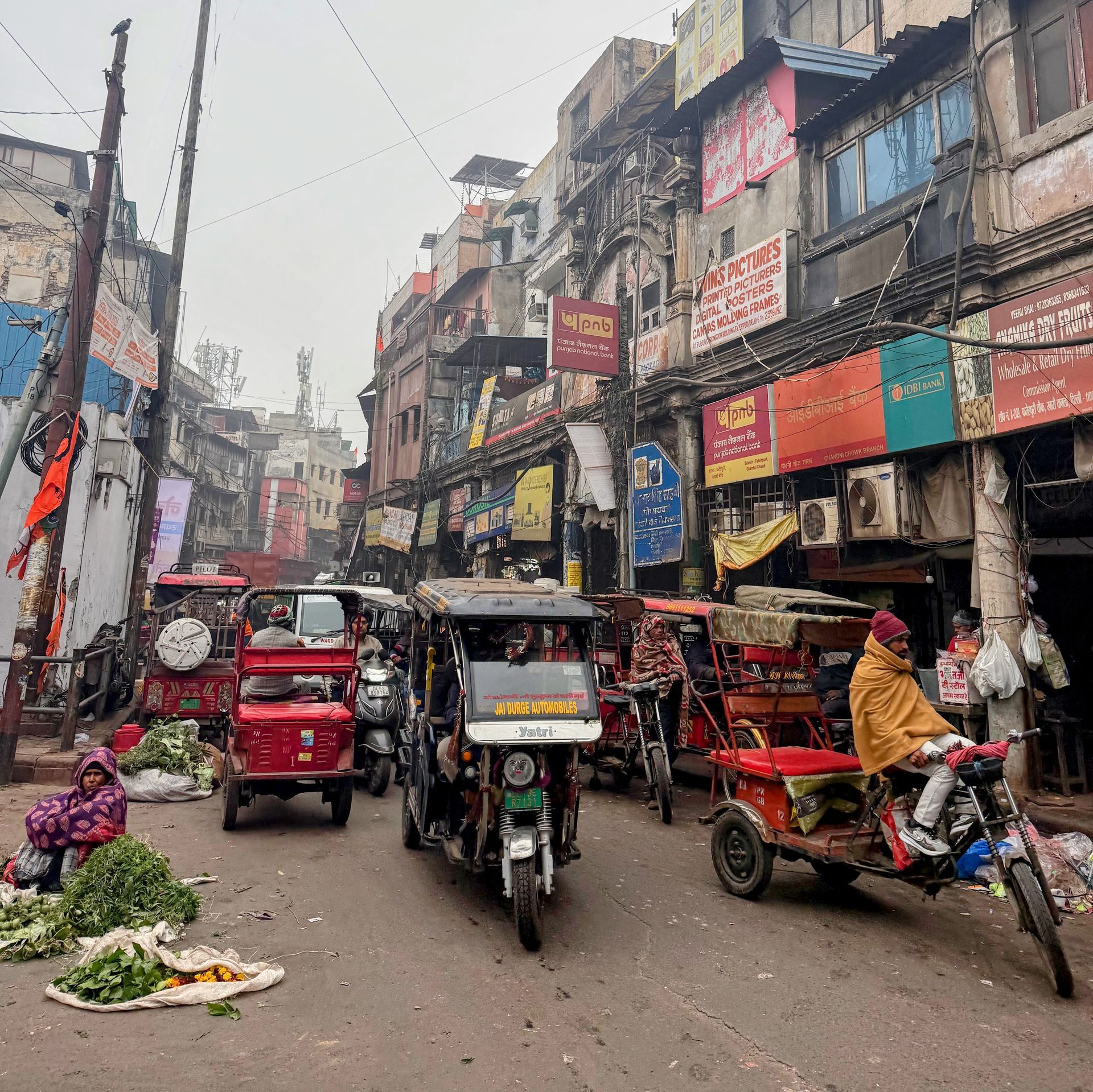
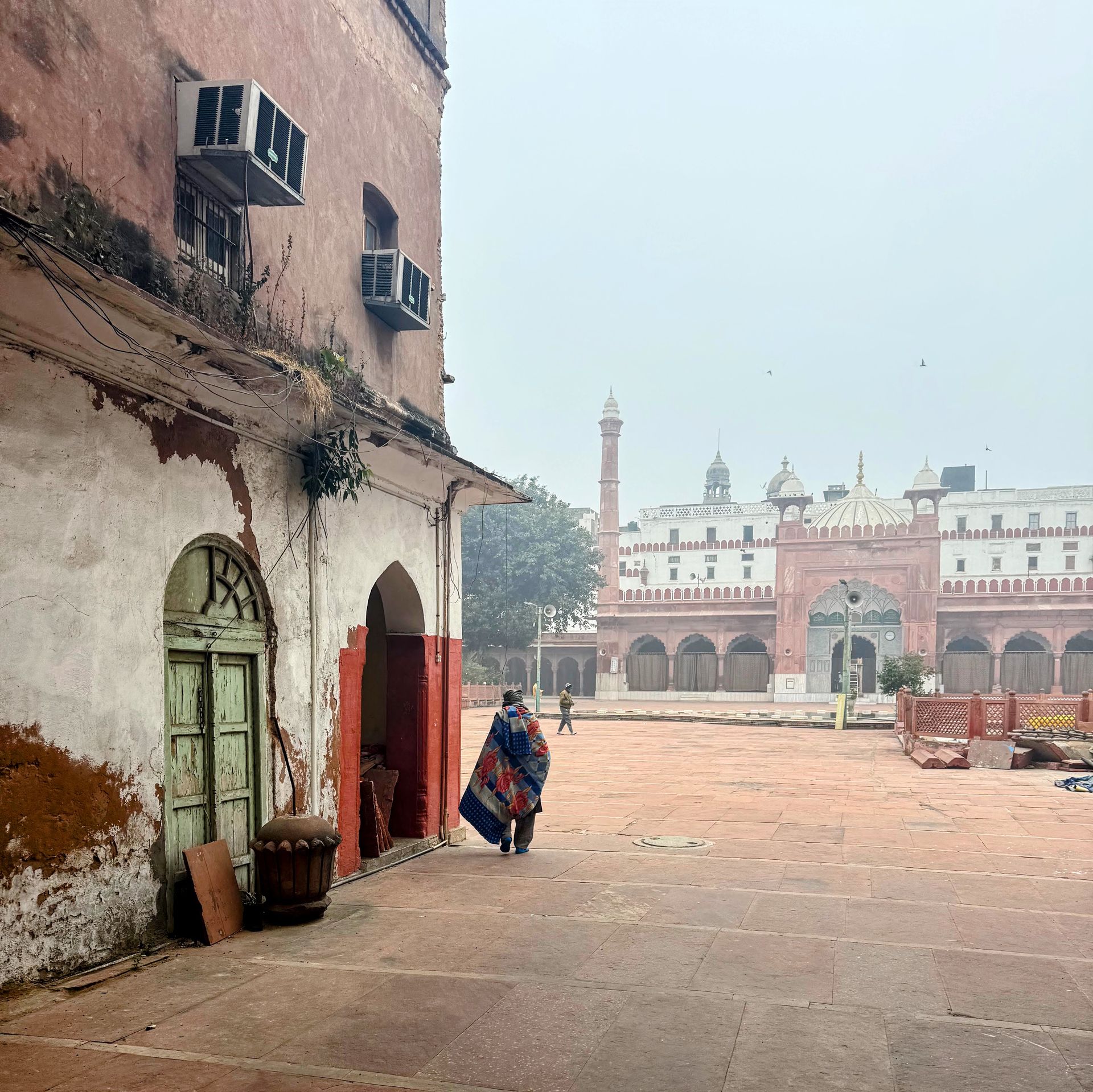
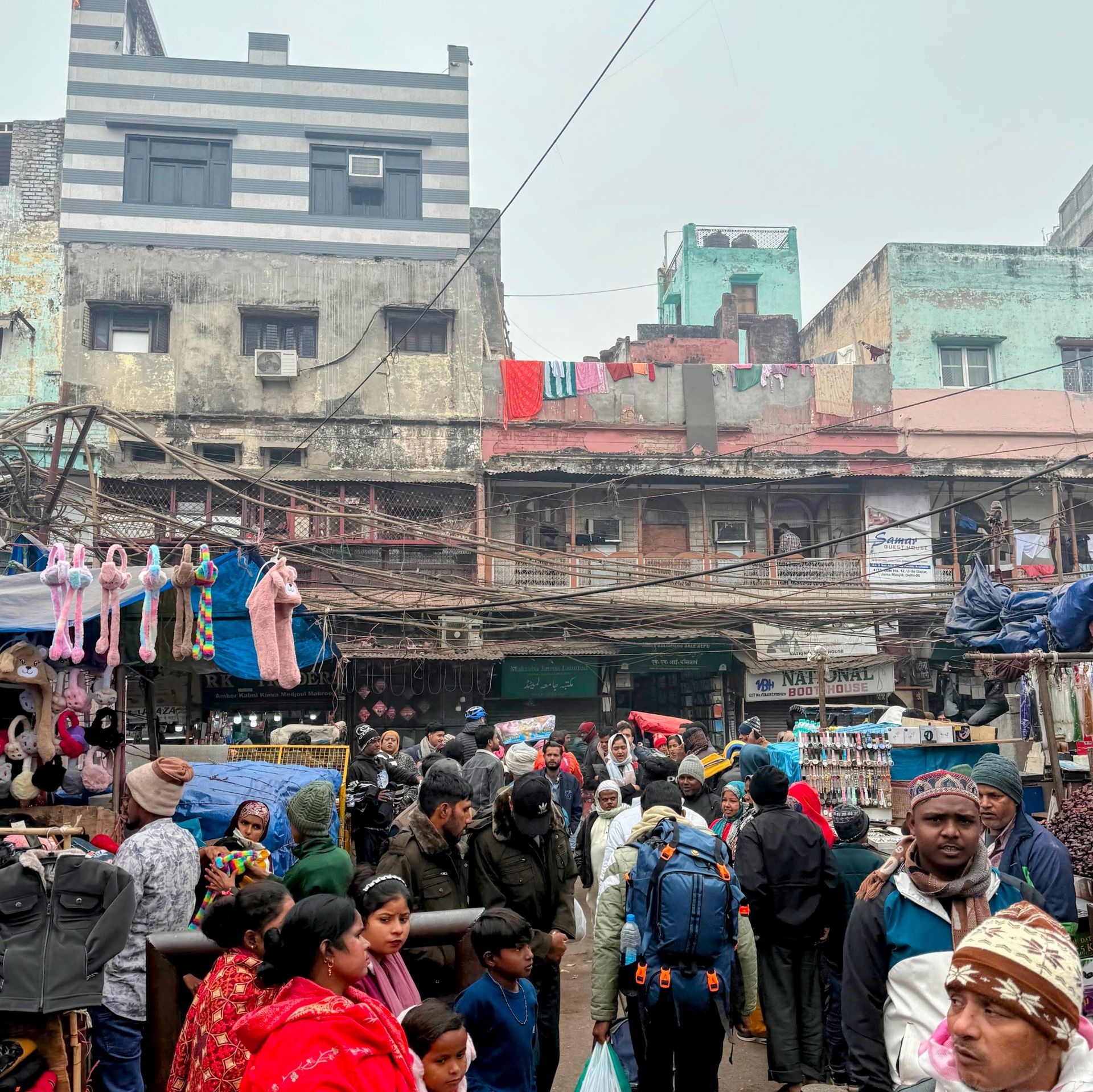
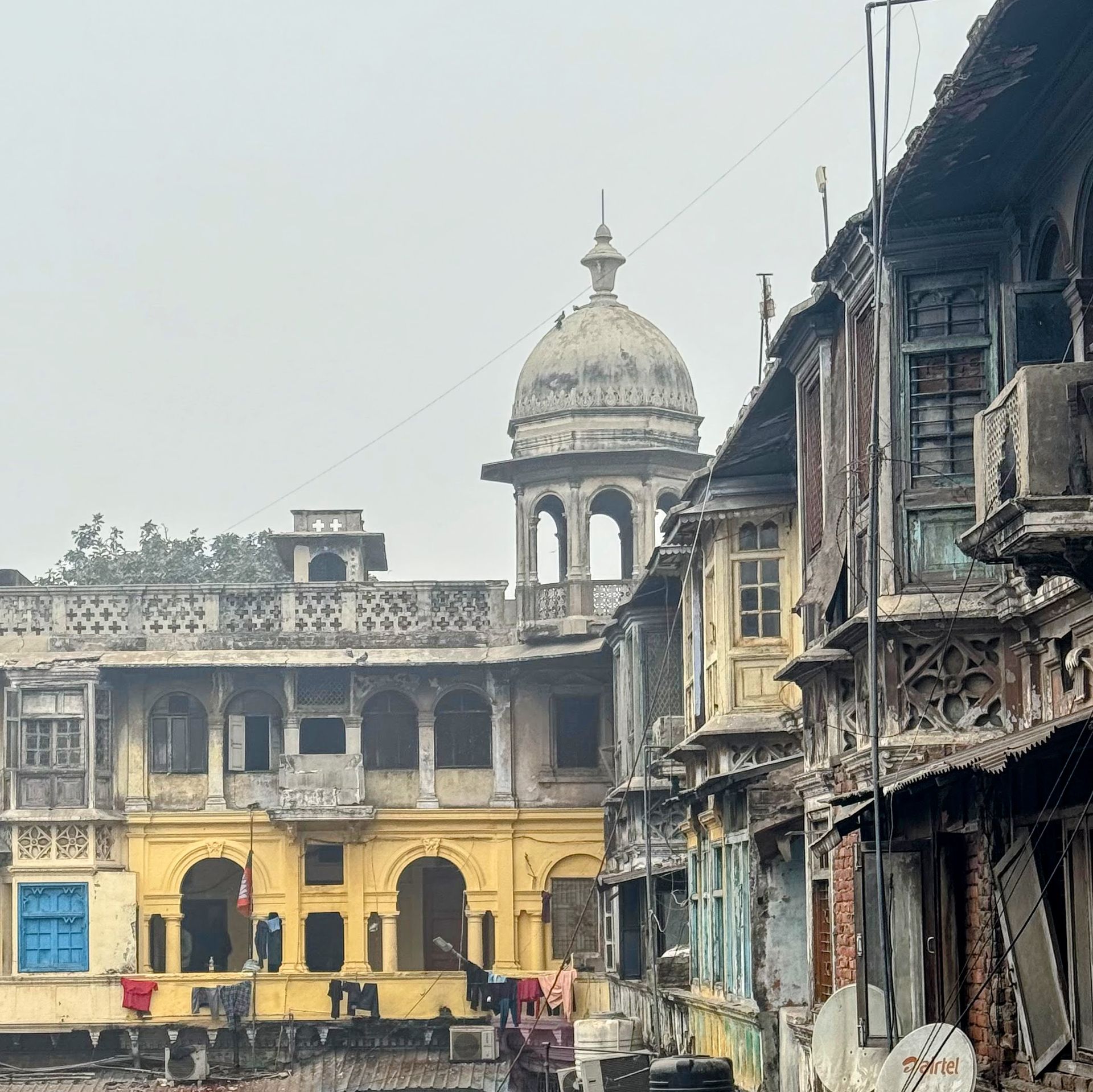
This part of the city was once Shahjahanabad, the 17th century capital built by Emperor Shah Jahan. At the time, it was considered one of the most prosperous and beautiful cities in the world. Cycling through it felt like moving through layers of time. We passed four hundred year old alleys tangled with electric cables, with the smell of chai and breakfast curry in the air, and a constant mix of horns, voices, and movement.
Here, the past and present coexist in the most fascinating and chaotic way.
We rode through narrow lanes and suddenly emerged in front of major landmarks like Jama Masjid, the Red Fort, and the spice market. The contrast was striking and gave real perspective on how layered the city is. Unfortunately, we did not have time to enter Jama Masjid during the tour and could not come back later. If you can, it is really worth planning one or two extra hours in the area afterward to walk around on foot, soak in the atmosphere, and take photos. I wanted to take so many pictures during the ride, but between the traffic, the state of the road, and my kid sitting behind me, it felt a bit too risky.
Gurudwara Bangla Sahib and the Langar Kitchen
After some downtime and lunch at the hotel, we felt recharged and ready to head out again.
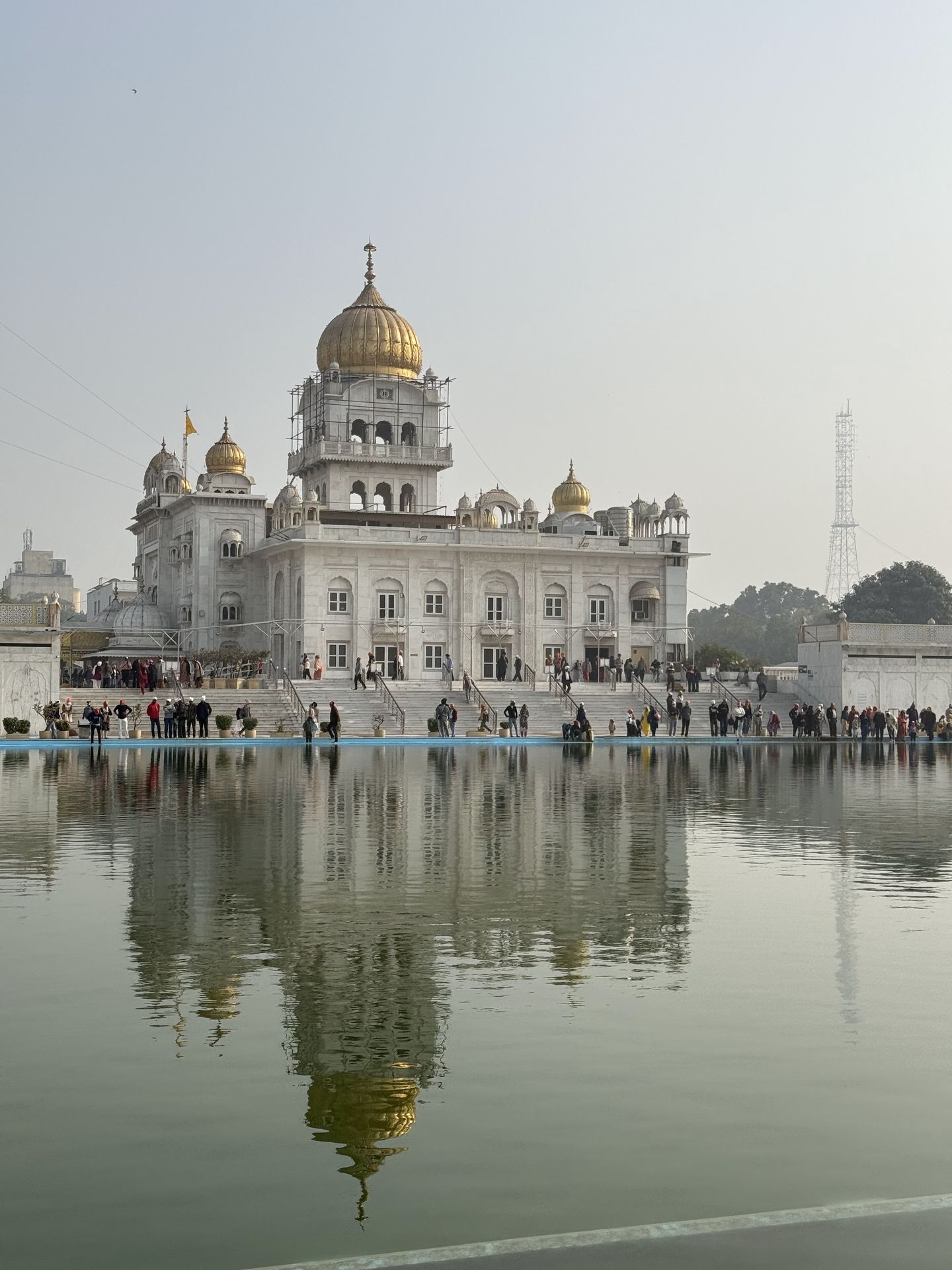
So, in the afternoon, we visited Gurudwara Bangla Sahib, one of the most important Sikh temples in India. We almost skipped it due to time constraints, but I am so glad we did not. The visit took around one hour. We received incredibly warm welcome from the volunteers, who generously took the time to guide us and share their knowledge.
One volunteer explained the foundations and values of the Sikh religion, focusing on equality, service, and devotion. He spoke directly to our kids as well, sharing lessons about kindness, the importance of education, and caring for the community. It was one of those moments that truly reminds you that raising children takes a village. Another volunteer accompanied us through the temple and the langar kitchen, patiently answering our questions. They never asked for any contribution, but we happily made a donation.
Sikhism’s values come to life in the langar, the community kitchen where volunteers serve free meals to anyone, regardless of religion, background, or social status. This langar feeds up to 80,000 people every day, entirely through donations and volunteer work. Visitors are welcome not only to observe, but also to help prepare food, serve meals, or clean. It is incredibly humbling and powerful to witness.
Hauz Khas Village and Dinner
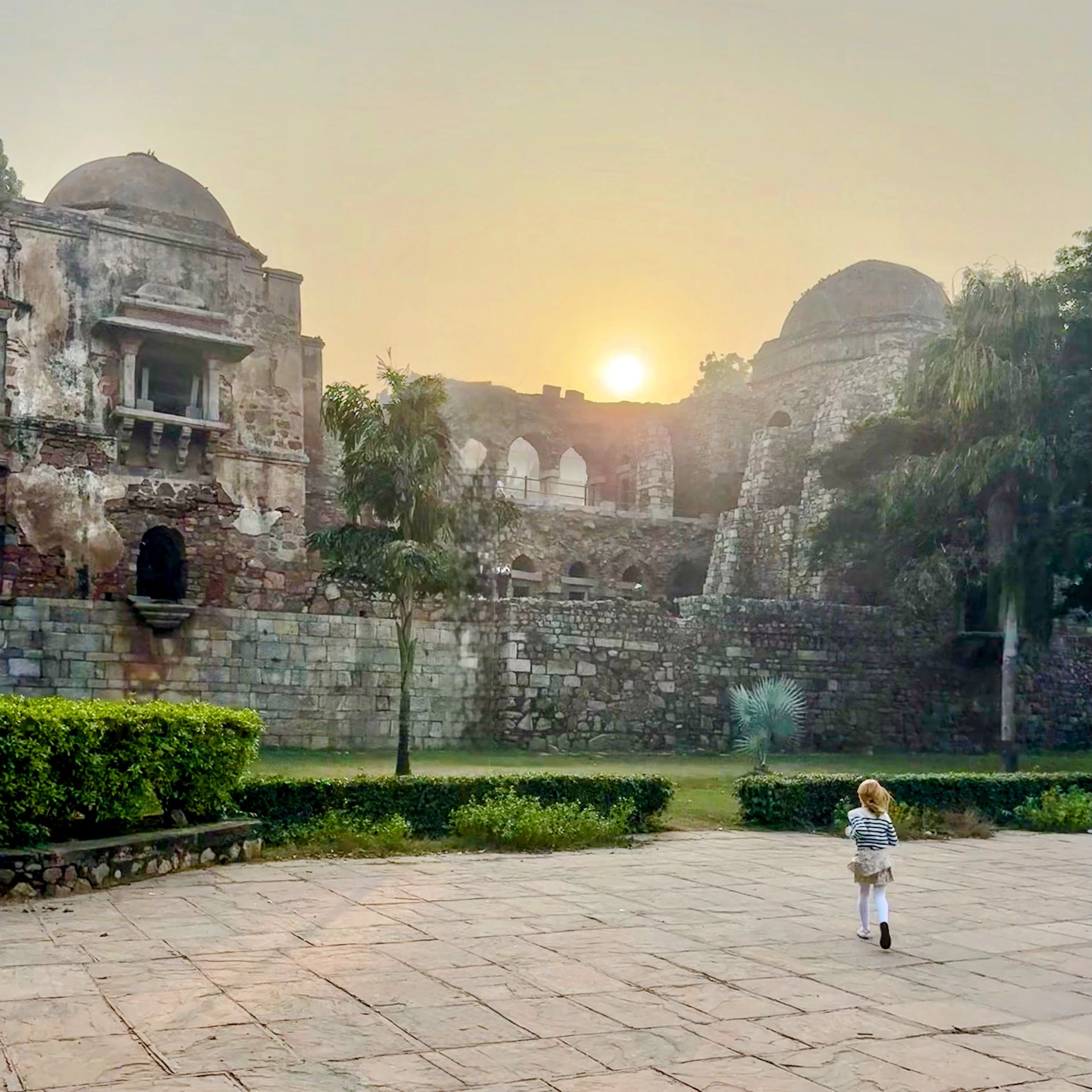
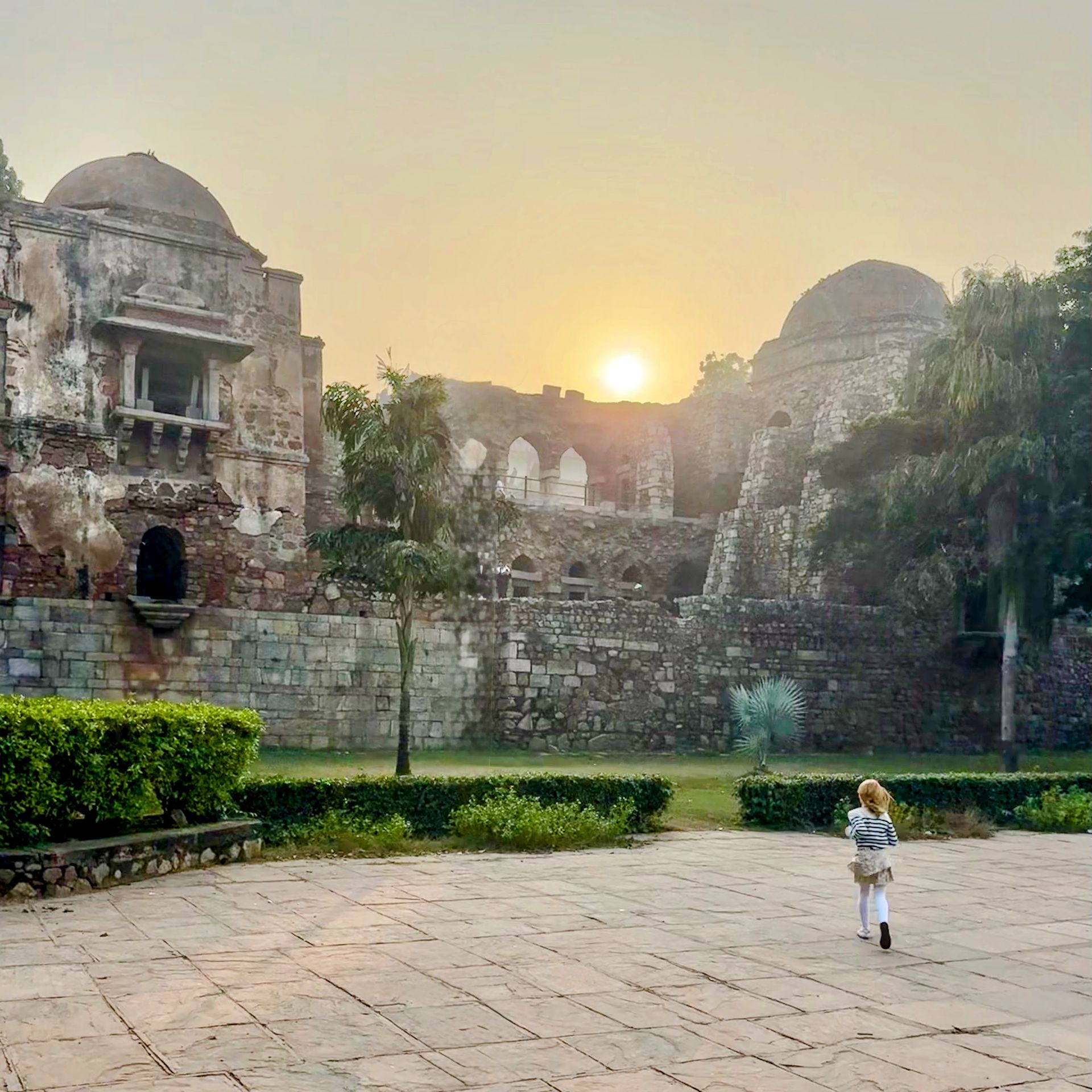
The day concluded in Hauz Khas Village, a lively area blending medieval ruins with boutiques, cafés, and nightlife.
Dinner at Coast Cafe offered a relaxed setting and great food quality before returning to the hotel.
Day 3 : Some market
and ancient monument
Dilli Haat for some shopping
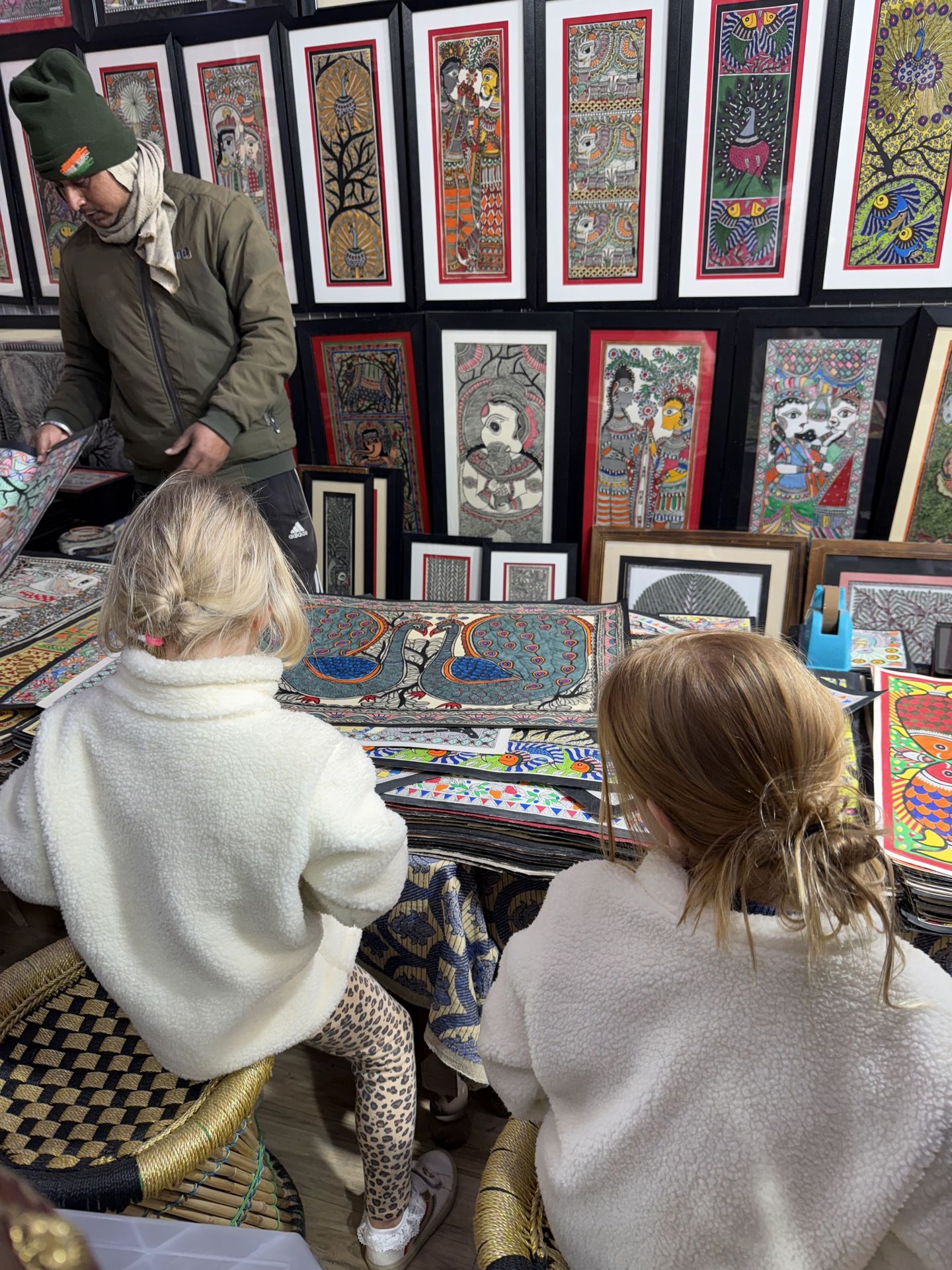
Before heading to Qutb Minar, we stopped at Dilli Haat, which turned out to be a very pleasant way to start the day. The market opens at 11, and while not all stalls are open at that time, it actually works in your favor. The atmosphere was calm, there were very few crowds, and it felt comfortable to walk around, browse, and take your time.
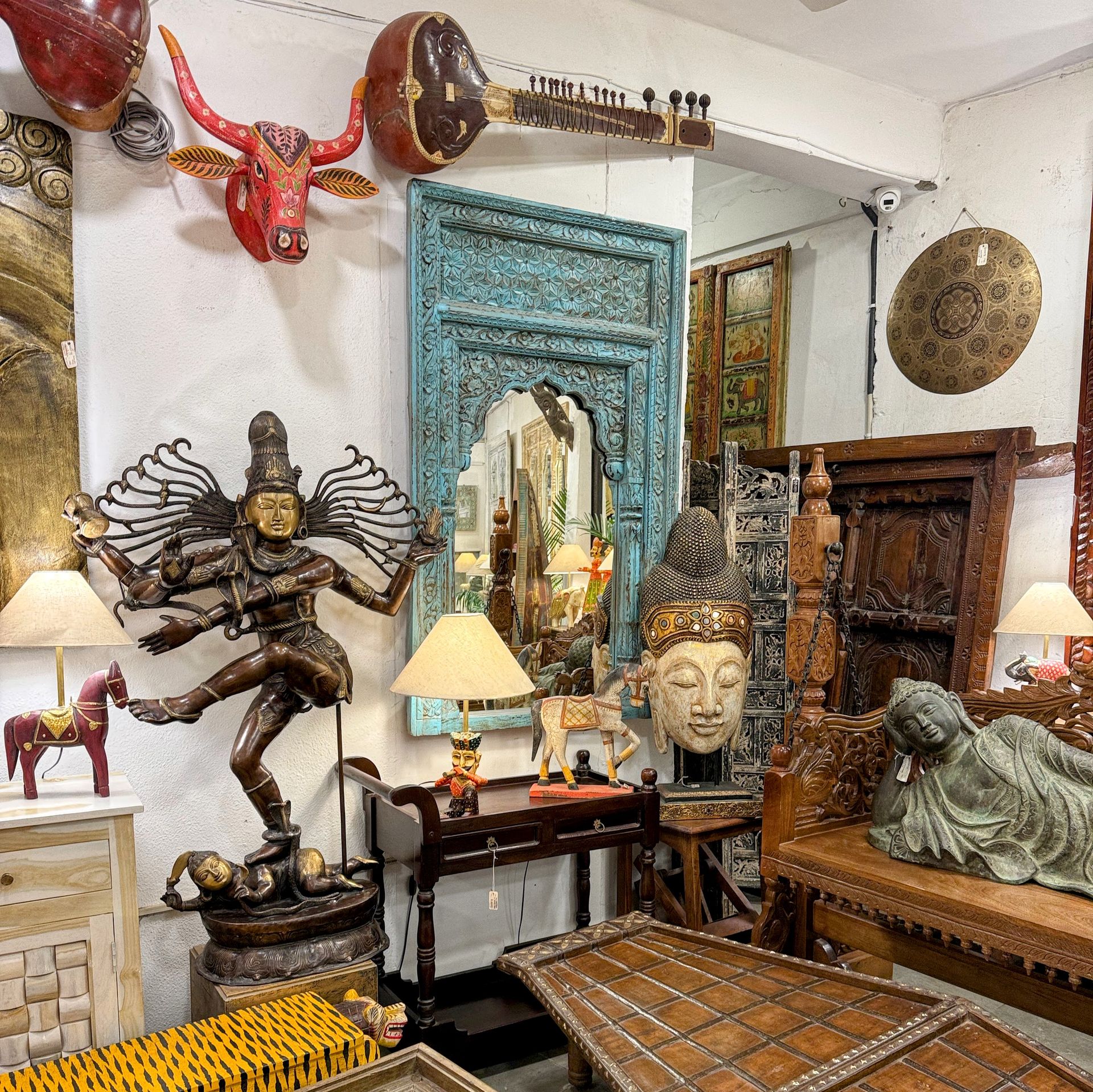
Dilli Haat brings together handicrafts and food from different regions of India, making it a nice place to get a quick overview without the intensity of larger markets. We ended up buying a few paintings, as well as a blanket and some shawls. Bargaining is definitely expected here, as prices are often set quite high at first, so do not hesitate to negotiate firmly.
Qutb Minar Complex
We, then, headed to the Qutb Minar, a Unesco World Heritage Site. Rising 73 meters high, this 12th century minaret is surrounded by ancient ruins, mosques, and intricately carved pillars. It is a fascinating reminder of Delhi’s long and layered history.
Side note : If you are planning a longer trip, possibly continuing on to Rajasthan afterward, this is something we did not come across again, so it is definitely worth visiting while you are in Delhi.
Lunch at Olive Bar and Kitchen
Lunch was at Olive Bar and Kitchen, a stylish, award winning restaurant set within a beautifully restored heritage building, conveniently located close to Qutb Minar. It is a well established address in Delhi’s dining scene and feels perfect for a leisurely final meal in the city, especially after a morning of sightseeing.
Delhi to Agra
By mid afternoon, it was time to hit the road for Agra. The four hour drive marked the end of our Delhi chapter and the beginning of another iconic Indian experience.
Traveling in India with family? Make staying connected easy with our India eSIM.